
Forter’s AI agent order data has shown a steady growth throughout the summer. From August to September, there was 24% month-over-month growth — or 48% if we include Instinct and Grok Bot, whose first orders we detected on September 1.
Then Meta launched Muse.
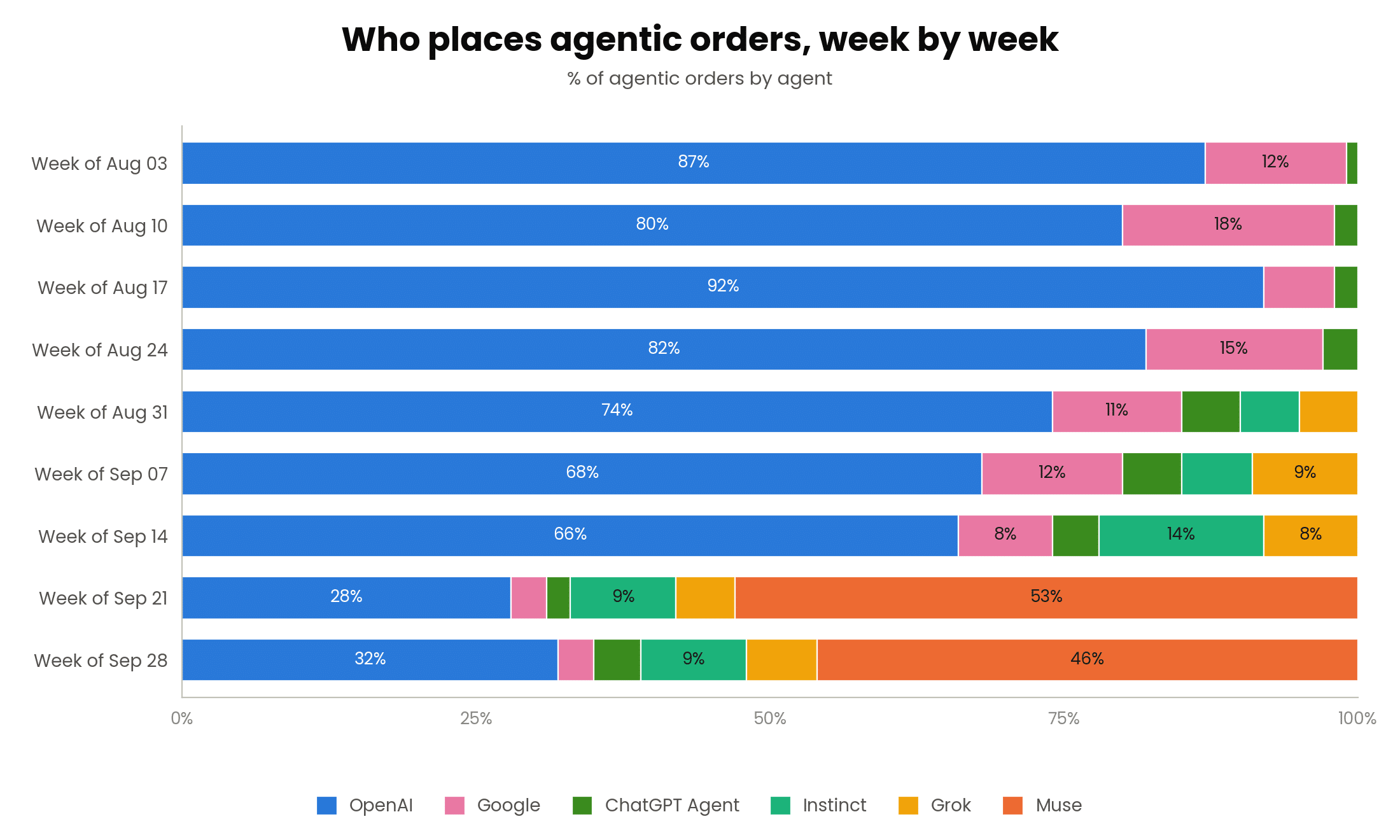
We began detecting Muse orders on September 21. That week, agentic orders were up by 229% month-over-month. While Muse’s dominance has since waned, it still placed 46% of agentic orders during the last week of the month.
Read on to learn more about data from our network.
Last updated: October 8, 2026
The methodology of our AI agent order data
This content is based on agentic commerce data from Forter’s network, spanning August 1 to October 7, 2026. Here is a quick guide on how to read the data:
- Agentic orders refer to orders placed through an AI agent. OpenAI (ACP or ChatGPT Instant Checkout) and Google (UCP or Gemini) check out through commerce protocols, identified by where the shopper came from. Muse, Instinct, Grok Bot, and ChatGPT Agent — a browsing agent that’s reported separately from OpenAI’s protocol checkout — use screen scraping, driving the merchant’s own checkout pages, identified by the agent platform. “All agents” counts each agentic order once.
- Detection dates are the dates we started detecting agents reliably, which may be later than the dates they actually started placing orders. Instinct and Grok Bot first appeared on September 1. Muse was first detected on September 21.
How agentic orders have accelerated since the launch of Muse
Throughout August, OpenAI placed 82% to 93% of agentic orders every week. During its first week of detection, Muse accounted for more than half of agentic orders. Growth has been so fast that within eight days, Muse placed two-thirds of the agentic orders we saw during the previous month.
However, Muse’s growth has been additive, rather than coming at the expense of other agents. Since its launch, all agentic orders are now 5.3x their early August level.
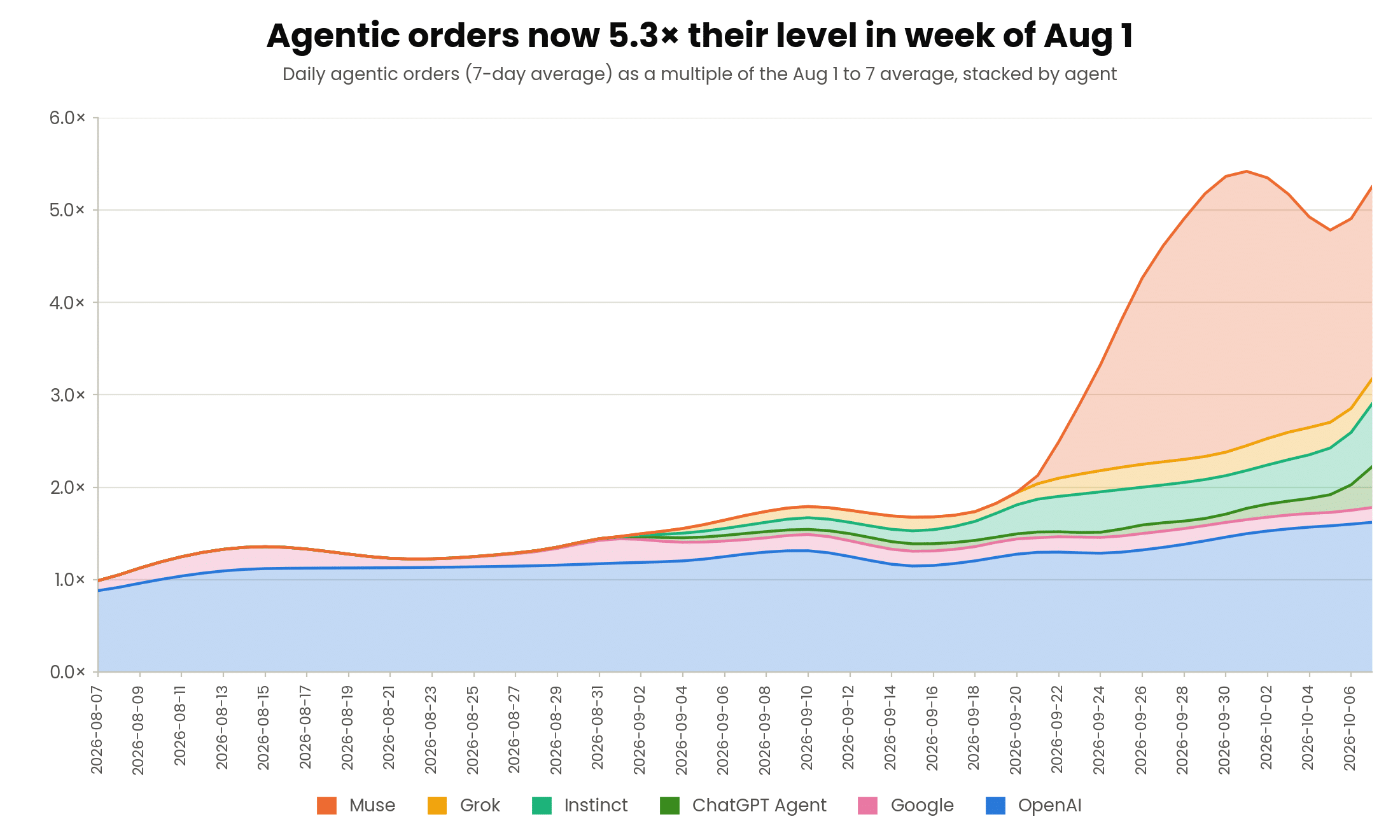
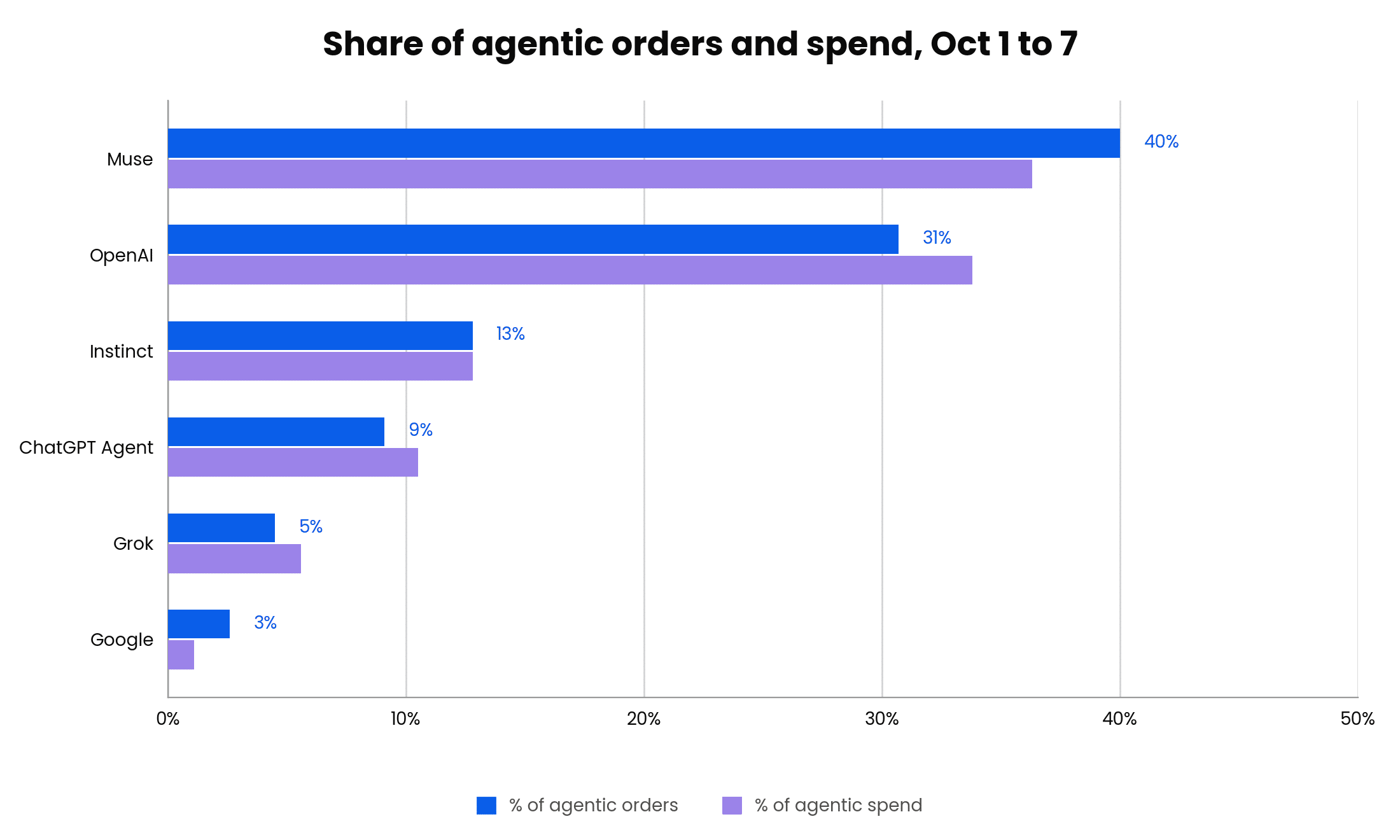
Since Muse arrived, OpenAI’s daily orders are up 16% week-over-week. The gap between Muse and OpenAI narrows when you factor in basket size. There are 9 percentage points between the two agents’ share of orders. But there are only 2 percentage points between their share of spend.
Muse ushered in a shift in AI agent order data, with screen-scaping agents overtaking commerce protocols. They made up 1% of agentic orders at the beginning of August and 65% last week. OpenAI is the one company that sells through both a checkout protocol and through a screen-scraping agent. Within two months, ChatGPT agent went from placing 1% to 12% of OpenAI’s agentic orders.
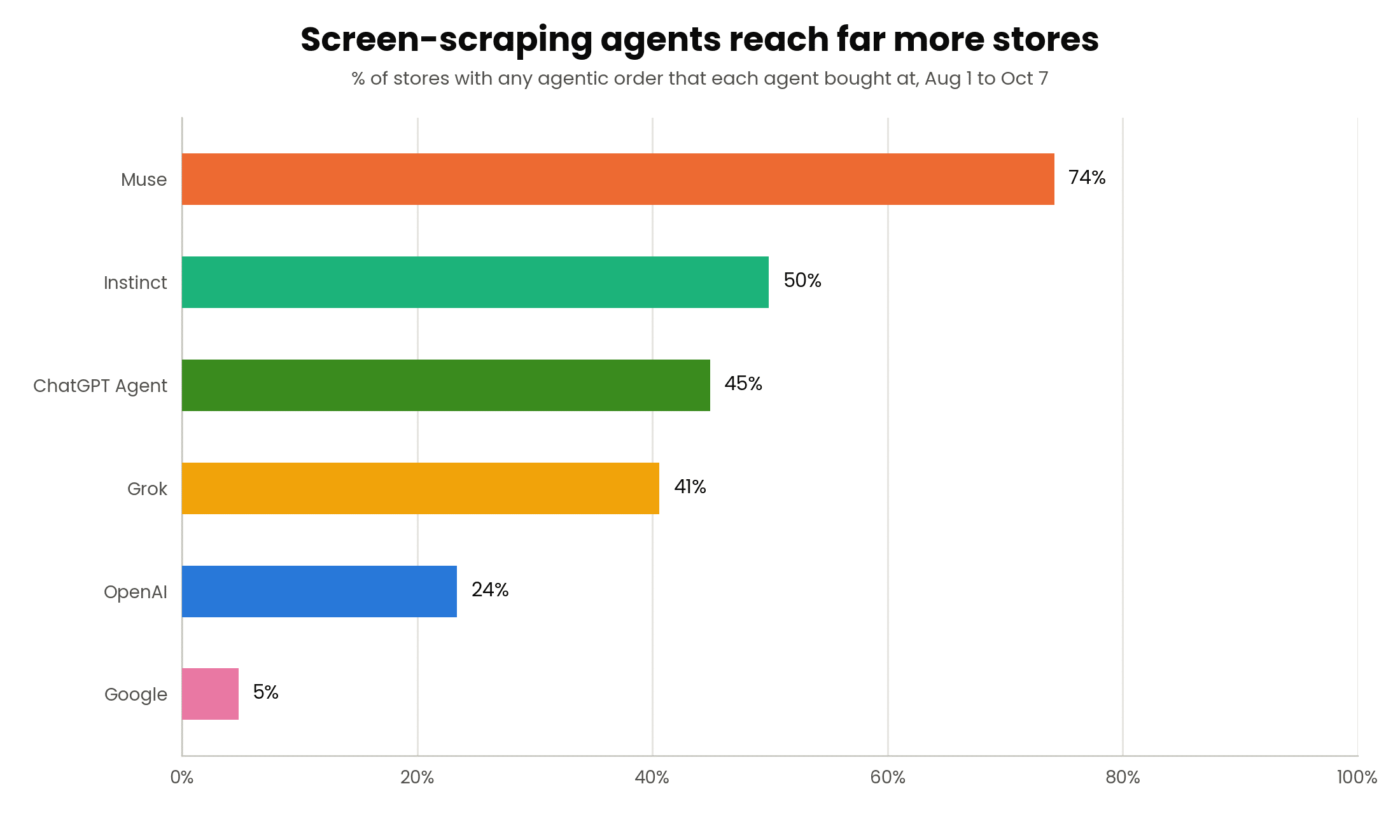
Screen-scraping agents outpace the commerce protocols in part because they reach far more stores. They can shop anywhere, while the protocols can only reach those stores that have integrated them.
Muse bought at 74% of the stores that received any agentic order. ChatGPT Agent bought at 45%: nearly double OpenAI’s commerce protocol.
The shopping habits of AI agents
Agentic orders are heavily concentrated in North America. The Google and OpenAI protocol pilots are US-only, while Muse is limited to the US and Canada. ChatGPT Agent has the most global footprint, placing nearly a quarter of its orders outside the US.
To keep the comparisons fair, we removed the effect of agents making shopping decisions based on price alone. The average agentic order was $223.
Spending 57% below the average, Google skews the numbers significantly as it only supports a single-item checkout. Google’s smaller orders suggest single-item or repeat purchases.
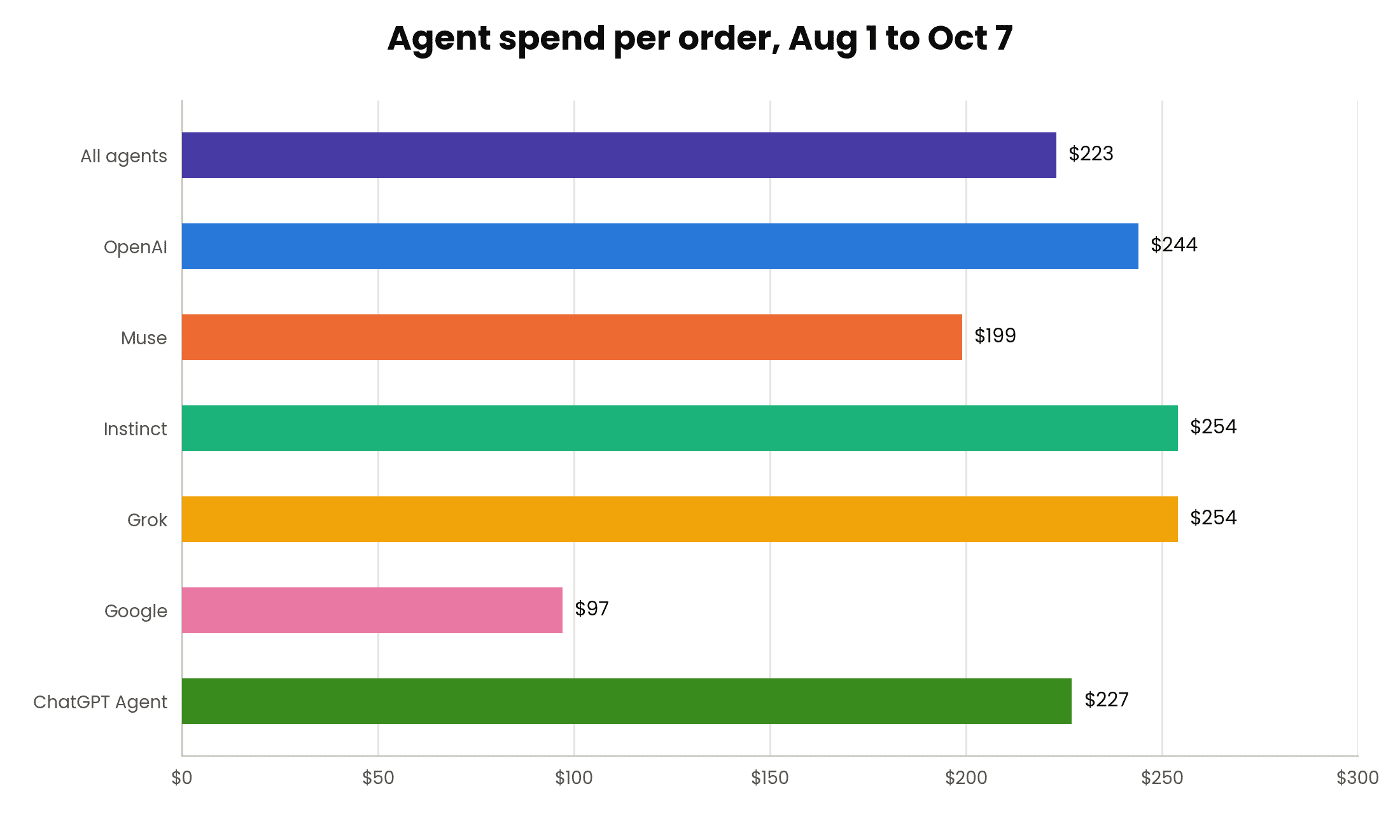
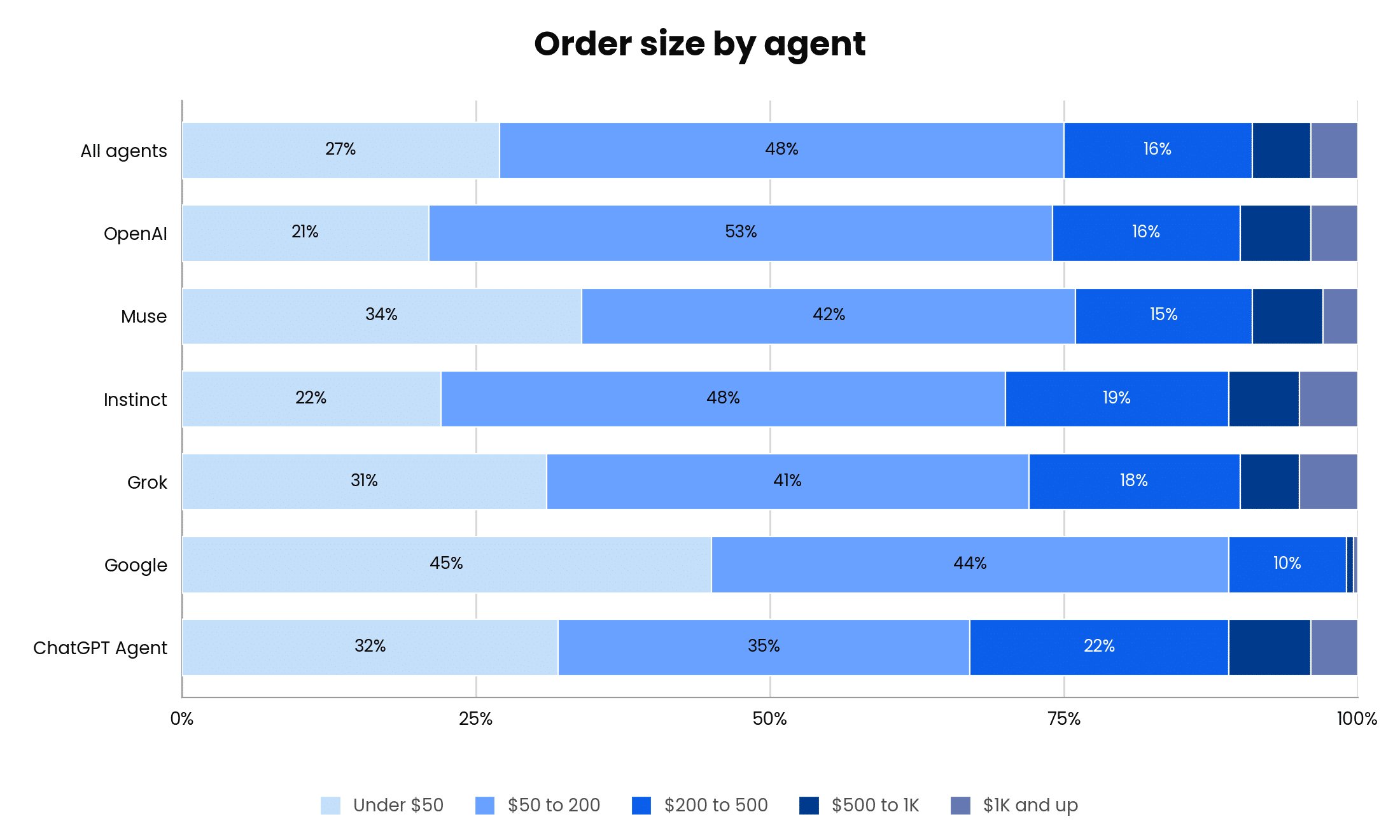
This is atypical for agents, which tend to be used for larger, more considered purchases. Only 27% of agentic orders are $50 or less: another average skewed by Google.
Purchases between $50 and $200 are the most common for all agents. ChatGPT has the largest share of orders greater than $500, though Instinct and Grok Bot make the most expensive purchases. Looking at which agents shop where, we see very little overlap in agents’ specialties. OpenAI dominates shipped retail categories: apparel, beauty, sporting goods, and consumer electronics.
Learn how agentic commerce will factor into holiday shopping
Surveying 2,000 UK adults, we found that 53% have or are open to using AI to find presents during their holiday shopping. We ran a similar survey in the US, which we’ll be sharing at the next Agentic Commerce Collective.
Join Jennifer Howard, Forter’s Chief Merchant, and Anjali Rele, VP of eCommerce at Balsam Brands, on October 22 as they discuss our findings.